Think positive ! Stay motivated ! Transform your life !

Motivational Quotes By Leo Tolstoy
12/20/20256 min read

Leo Tolstoy was born on September 9, 1828, at the family estate of Yasnaya Polyana in Russia, amidst the backdrop of an aristocratic lineage that spanned generations. As the fourth of five children in a noble family, his early life was defined by the contrasting elements of privilege and the societal responsibilities inherent to the aristocracy. This duality significantly influenced Tolstoy's worldview, as he navigated the tensions between wealth and the simplicity he later championed in his literary works.
Following the death of his mother when he was only two years old and his father’s passing a decade later, Tolstoy experienced a tumultuous childhood marked by the absence of parental guidance. He was raised by relatives who provided him with a diverse education, thus exposing him to a variety of philosophical and literary influences. The education he received was formal yet lacking the moral grounding Tolstoy would later seek, positioning him at a unique intersection of idealism and disillusionment during his formative years.
During his time at the University of Kazan, Tolstoy began to cultivate his literary voice, albeit initially focusing on law and oriental languages before abandoning his studies. His aristocratic upbringing facilitated a privileged view of Russian society, yet as he grew, he increasingly identified with the struggles of the peasantry, a theme that would permeate his later works. Significant events, such as his service in the military during the Crimean War, revealed profound truths about human existence and mortality, laying the groundwork for his philosophical inquiries.
These experiences contributed to a foundation of thoughts surrounding simplicity, humility, and the purpose of life—elements that would characterise Tolstoy's subsequent literary endeavours. The juxtaposition of his early wealth against his later values illustrates the dynamic evolution of his character and perspective, setting the stage for his illustrious career as a writer and philosopher.
Leo Tolstoy, one of the giants of literature, penned two of his most celebrated novels, War and Peace and Anna Karenina, which continue to resonate with readers today. War and Peace, published between 1865 and 1869, is often regarded as one of the greatest novels in world literature. The narrative spices up historical events, such as the Napoleonic Wars, with an intricate tapestry of fictional characters, exploring themes of fate, free will, and the interconnectedness of human lives. Through the lives of Pierre Bezukhov, Prince Andrei Bolkonsky, and Natasha Rostova, Tolstoy delves deep into the essence of humanity, exposing frailties, aspirations, and moral dilemmas. The sheer scale and depth of the novel effectively reflect the tumultuous period of Russian history, allowing readers to engage with the ideals and struggles of the time.
In stark contrast, Anna Karenina, first published in 1877, presents a more intimate examination of personal relationships and societal norms. The story chronicles the tragic affair between Anna Karenina and Count Vronsky, framed against the backdrop of 19th-century Russian aristocracy. This substantive novel serves as a critique of societal conventions surrounding love, fidelity, and family, vividly portraying the restraints imposed by social expectations. Tolstoy masterfully explores complex characters and their motivations, demonstrating how individual choices intersect with societal pressures. Notably, the duality of Anna's passionate love and her subsequent alienation reflects Tolstoy's insights into human nature, evoking profound empathy from readers.
The impact of these masterpieces on literature and society is unparalleled. They not only enriched the Russian literary canon but also influenced generations of writers and philosophers worldwide. By dissecting human emotions and social dynamics, Tolstoy's works provide crucial perspectives on the historical and sociocultural landscapes of his time. The timeless themes of love, conflict, and moral inquiry continue to resonate, ensuring that they remain pivotal works in the study of literature and human experience.
Leo Tolstoy's contributions to literature and philosophy remain significant even today, with a lasting impact that transcends time and cultural boundaries. His masterpieces, including "War and Peace" and "Anna Karenina," are not merely tales of love and conflict; they encapsulate deep questions about morality, existence, and human relationships. Through complex characters and intricate narratives, Tolstoy masterfully explores themes that resonate with the core of human experience. His ability to scrutinise the human condition has inspired countless readers and thinkers to examine their lives and beliefs.
Beyond literature, his philosophical writings emphasise moral integrity, simplicity, and the importance of living authentically. His advocacy for nonviolent resistance and social change has influenced a myriad of movements, notably inspiring figures such as Mahatma Gandhi and Martin Luther King Jr. The principles outlined in his essays, such as "The Kingdom of God Is Within You," advocate for a way of living that prioritises love and compassion over material wealth and societal norms. This ethical framework continues to provoke discussions around the role of individual agency in effecting societal transformation.
Moreover, his own life—marked by introspection and a continuous quest for meaning—serves as an exemplar for individuals seeking to lead purposeful lives. His later years were dedicated to aligning his actions with his beliefs, emphasising the importance of self-awareness and genuine connection with others. The legacy of Leo Tolstoy is particularly relevant today, as individuals navigate the complexities of contemporary existence. His works challenge readers to pursue deeper understanding and engagement with the world, promoting a holistic approach to life that encourages reflection and empathy. Indeed, Tolstoy's enduring influence inspires future generations to seek meaningful existence, reminding us of the transformative power of literature and philosophy in shaping our thoughts and actions.
Motivational Quotes That Resonate Today


" 'Everyone thinks of changing the world, but no one thinks of changing himself."
" 'If you want to be happy, be."
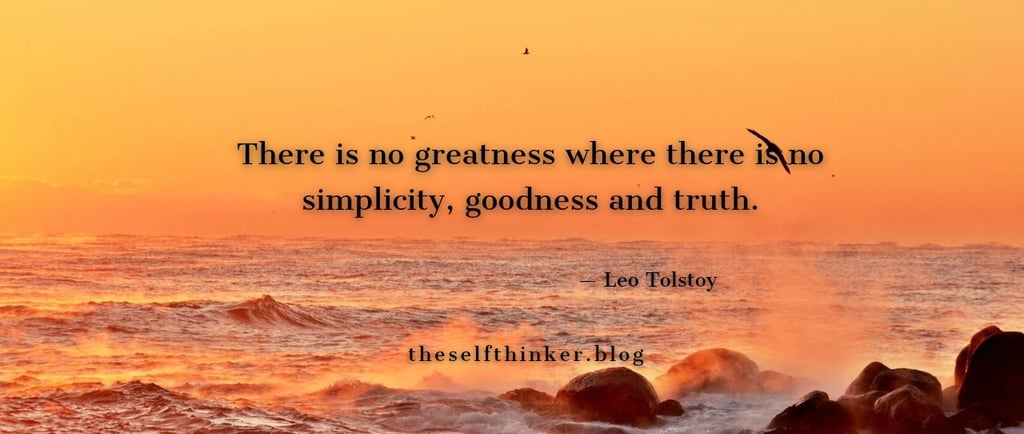
" There is no greatness where there is no simplicity, goodness and truth."
" An arrogant person considers himself perfect. This is the chief harm of arrogance. It interferes with a person's main task in life - becoming a better person."
" The two most powerful warriors are patience and time."
" The sole meaning of life is to serve humanity."
" Joy can only be real if people look upon their life as a service and have a definite object in life outside themselves and their personal happiness."
" The changes in our life must come from the impossibility to live otherwise than according to the demands of our conscience, not from our mental resolution to try a new form of life."
" All happy families resemble one another; each unhappy family is unhappy in its own way."
" Without knowing what I am and why I am here, life is impossible."

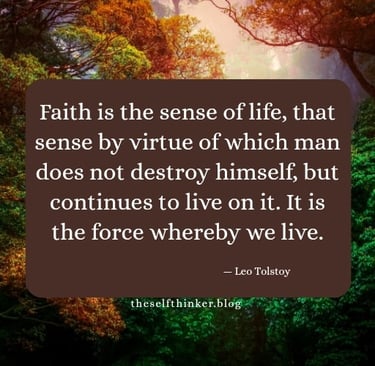
" Faith is the sense of life, that sense by virtue of which man does not destroy himself, but continues to live on. It is the force whereby we live."
" The chief difference between words and deeds is that words are always intended for men for their approbation, but deeds can be done only for God."
" One of the first conditions of happiness is that the link between Man and Nature shall not be broken."
" And all people live, Not by reason of any care they have for themselves, But by the love for them that is in other people."
" It is amazing how complete is the delusion that beauty is goodness."
" Without knowing what I am and why I am here, life is impossible."
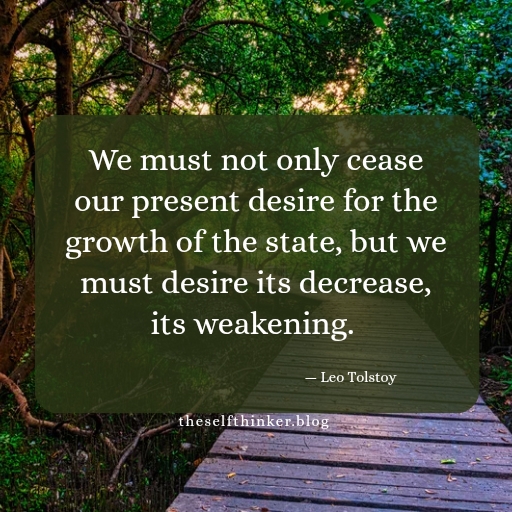
" We must not only cease our present desire for the growth of the state, but we must desire its decrease, its weakening."
" The law condemns and punishes only actions within certain definite and narrow limits; it thereby justifies, in a way, all similar actions that lie outside those limits."
" Our body is a machine for living. It is organized for that, it is its nature. Let life go on in it unhindered and let it defend itself."
" True life is lived when tiny changes occur."
Conclusion :
Throughout his life, Leo Tolstoy grappled with existential questions and the societal norms of his era. His journey from a privileged aristocrat to a devoted pacifist and advocate for social justice provides a rich narrative of personal transformation. His beliefs and pursuits ultimately led him to prioritise the connection between humanity, compassion, and truth.
Leo Tolstoy's life and motivational quotes not only reflect his own struggles but also offer timeless wisdom for modern readers. His emphasis on introspection, simplicity, and empathy serves as a reminder that the essence of life lies in our relationships with others and the narratives we create for ourselves. As we navigate our own journeys, reflecting on Tolstoy's teachings can provide invaluable guidance toward a fulfilling and meaningful existence.