Think positive ! Stay motivated ! Transform your life !

Inspirational Wisdom: Lee Kuan Yew's Motivational Quotes for Daily Life
Mamuni Digal
2/22/20266 min read
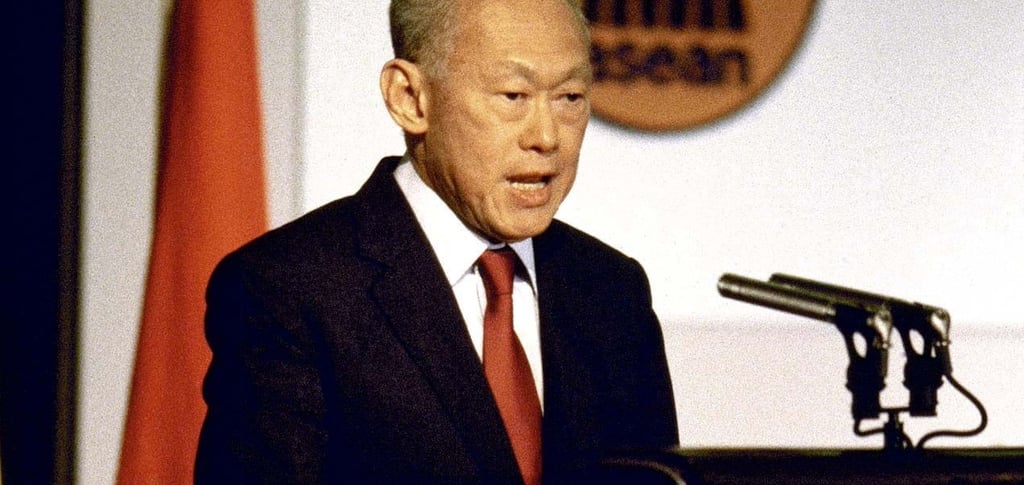
Lee Kuan Yew was the founding father of modern Singapore. Born on September 16, 1923. His journey began in a humble environment, leading him to pursue legal studies in Britain. After returning to Singapore, he co-founded the People's Action Party (PAP) in 1954, which eventually became the dominant political force in the country. His tenacity and commitment to national development helped shape Singapore from a struggling port city into a prosperous global hub.
Lee Kuan Yew's political philosophy was anchored in pragmatism and a deep understanding of human behavior. He believed that effective leadership demanded accountability, meritocracy, and a clear vision for the future. His policies were often seen as stern but necessary to ensure stability and growth. He emphasized the importance of education and economic development, which were crucial for creating opportunities for Singaporeans and attracting foreign investments.
Throughout his tenure as Prime Minister from 1959 to 1990, his decisive actions laid the groundwork for Singapore’s social and economic progress. He prioritized the rule of law, anti-corruption measures, and a strong central government to navigate the challenges posed by race, religion, and regional politics. This approach not only unified the nation but also instilled a sense of national identity among its citizens.
Lee Kuan Yew's legacy extends beyond his political life; his quotes and insights about leadership, resilience, and the human condition continue to inspire individuals worldwide. In a rapidly changing world, his motivational quotes serve as a guiding light for those seeking direction and purpose in their daily lives, embodying principles that remain relevant in various contexts.
He was not only a visionary leader but also a source of inspiration through his compelling quotes. One significant quote, "I am generally wary of solutions. Solutions are often temporary fixes to problems that are not addressed. The real problem is not what you see, but what you cannot see," emphasizes the importance of critically analyzing underlying issues rather than just treating surface-level symptoms. This wisdom resonates particularly in leadership and personal development, where understanding the root causes of challenges can lead to sustainable solutions.
One of the key aspects of his legacy is his approach to leadership. He once said, "Leadership is about taking responsibility, not making excuses." This quote emphasizes the importance of accountability in any leader's journey. It encourages individuals not just to hold positions of power but also to accept the weight of that responsibility. In today's fast-paced world, this lesson is vital for anyone striving to lead, whether in the business realm or personal life.
His words encourage us to focus on actions rather than simply words. His belief that "The task of a leader is to get his people from where they are to where they have not been" speaks volumes about vision and the will to act. For anyone looking to motivate themselves or others, this insight serves as a reminder to aspire beyond current realities and take practical steps towards achieving greater goals.
Life is often filled with challenges, and his perspective on perseverance shines through in his quotes. He famously stated, "You must look at the facts, accept them, and then work with them to come to the best solution." This approach reveals the importance of realism in problem-solving. In the face of adversity, maintaining a grounded perspective can inspire resilience and innovative thinking.
Moreover, his assurance that "I never stop trying to become relevant" underlines the necessity for continual growth and adaptability. In an ever-changing world, these words remind us that personal development and relevance are continuous processes. For those feeling stuck, this quote serves as a motivator to pursue knowledge and innovation actively.
Motivational Quotes By Lee Kuan Yew
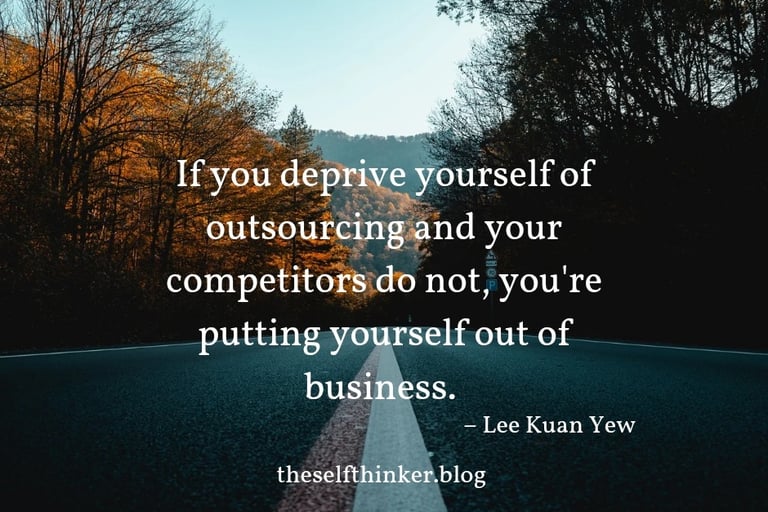
" If you deprive yourself of outsourcing and your competitors do not, you're putting yourself out of business."
" The difficult part was getting the people to change their habits so that they behaved more like first-world citizens, not like third-world citizens spitting and littering all over the place."
"If you are going to lower me into the grave, and I feel something is wrong, I will get up."
" I have always thought that humanity was animal-like. The Confucian theory was man could be improved, but I'm not sure he can be. He can be trained; he can be disciplined."
" We are pragmatists. We don't stick to any ideology. Does it work? Let's try it, and if it does work, fine, let's continue it. If it doesn't work, toss it out, try another one. We are not enamored with any ideology."
" You need a certain standard of literacy, moral and ethical values, to be able to run a one man, one vote system."
" I can feel the gradual decline of energy and vitality. And I mean generally, every year, when you know you are not on the same level as last year. But that's life."
" Peace and security in the Asia-Pacific will turn on whether China emerges as a xenophobic, chauvinistic force, bitter and hostile to the West because it tried to slow down or abort its development, or whether it is educated and involved in the ways of the world - more cosmopolitan, more internationalised and outward looking."
" I have always thought that humanity was animal-like. The Confucian theory was man could be improved, but I'm not sure he can be. He can be trained; he can be disciplined."
" The acid test of any legal system is not the greatness or the grandeur of its ideal concepts, but whether, in fact, it is able to produce order and justice."
" The original communitarianism of Chinese Confucian society has degenerated into nepotism, a system of family linkages, and corruption, on the mainland. And remnants of the evils of the original system are still found in Taiwan, Hong Kong, and even Singapore."
" My children were educated in what were then Chinese schools, and they learned English as a subject. But they made up when they went to English-language universities. So they didn't lose out. They had a basic set of traditional Confucian values. Not my grandchildren."
" Latecomers to industrial development have had to catch up by finding ways of closing the gap."
" The exuberance of democracy leads to undisciplined and disorderly conditions which are inimical to development."
" I was a product of the times, the war, the occupation, the reoccupation, my 4 years in Britain, admiring but at the same time questioning whether they are able to do a better job than we can."
" The problem is to keep the monkey mind from running off into all kinds of thoughts."
" At the end of the day, is Singapore society better or worse off? That's the test."
" Those who believe that after I have left the government as prime minister, I will go into a permanent retirement, really should have their heads examined."
" In the East, the main object is to have a well-ordered society so that everybody can have maximum enjoyment of his freedoms. This freedom can only exist in an ordered state and not in a natural state of contention and anarchy."
" It's irrelevant to me what young Singaporeans think of me. I've lived long enough to know that you may be idealised in life and reviled after you're dead."
Conclusion:
Lee Kuan Yew's motivational quotes are more than just words; they are guiding principles that encourage us to take responsibility, face challenges head-on, and never stop striving for improvement. By integrating these lessons into our daily routines, we can foster an environment of growth, accountability, and inspiration.
As you go about your day, reflect on these compelling insights from one of the world's most influential leaders. Let them inspire you to not only meet your challenges but to exceed them, fostering a future that is as bright and ambitious as Lee Kuan Yew envisioned.